


Update (Cortana Deprecation): Cortana is now deprecated by Microsoft and shut down across Windows 10 and Windows 11. If you launch the legacy Cortana app today, Windows informs you that the app is retired. If your goal is to turn off Microsoft’s modern built-in assistant, you are likely looking to remove Microsoft Copilot. Below, you will find tested steps to disable or completely uninstall Microsoft Copilot, remove residual Cortana packages, and use the classic registry tweak for older Windows 10 machines.
How to Disable or Remove Microsoft Copilot
Microsoft rolled out Copilot across Windows 11 and backported it to modern Windows 10 builds. If you do not want an AI assistant residing on your taskbar or loading background services, here is how to disable or uninstall Copilot cleanly.
1. Hide the Copilot Button from the Taskbar
If you simply want the Copilot icon out of sight, you can toggle it off directly from taskbar settings:
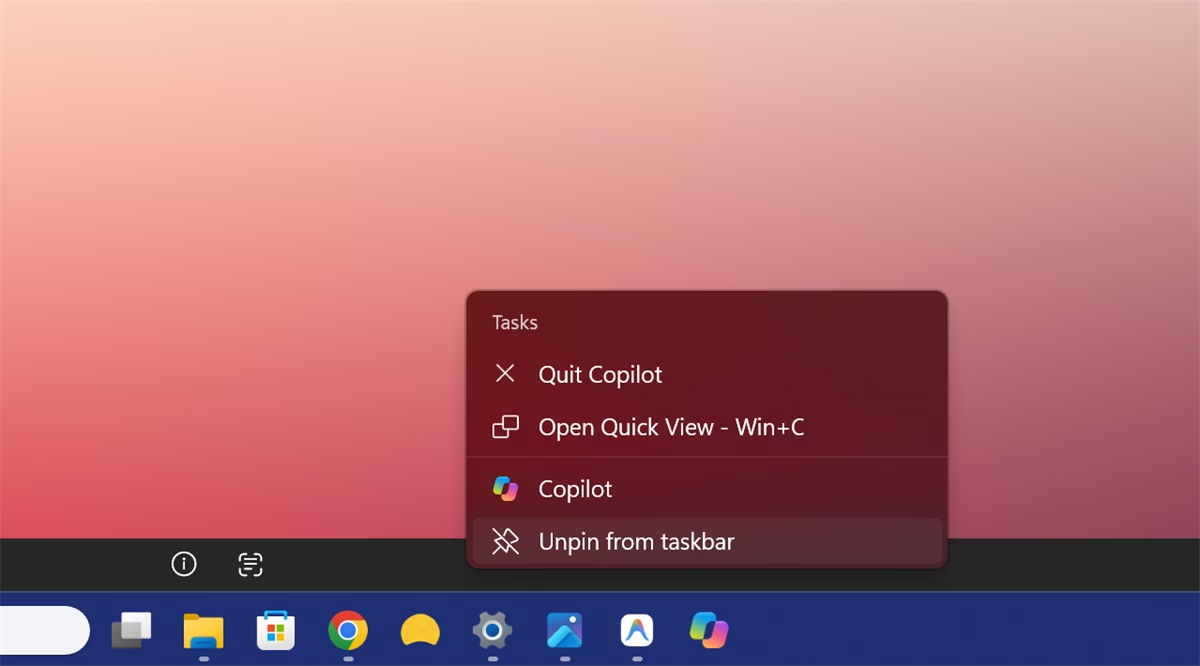
- Windows 11: Right-click an empty space on the taskbar, select Taskbar settings, and switch the Copilot toggle to Off.
- Windows 10: Right-click the taskbar and click Show Copilot (preview) button to uncheck it.
2. Turn Off Copilot via Group Policy (Pro & Enterprise)
If your PC runs Windows 10 or 11 Pro, Enterprise, or Education, you can use the Group Policy Editor to disable Copilot system-wide:
- Press
Windows + R, typegpedit.msc, and hit Enter. - Go to:
User Configuration > Administrative Templates > Windows Components > Windows Copilot. - Double-click the policy setting labeled Turn off Windows Copilot.
- Select Enabled, click Apply, and then OK.
- Restart your PC or sign out and back in for Windows to enforce the policy.
3. Disable Copilot Using Windows Registry (All Editions)
Windows Home editions do not include Group Policy Editor, but adding a single registry value accomplishes the exact same result:
- Press
Windows + R, typeregedit, and hit Enter. - Go to the following key:
HKEY_CURRENT_USER\Software\Policies\Microsoft\Windows - Right-click the
Windowskey, select New > Key, and name itWindowsCopilot(if it is not already present). - Select
WindowsCopilot, right-click inside the right pane, choose New > DWORD (32-bit) Value, and name itTurnOffWindowsCopilot. - Double-click
TurnOffWindowsCopilot, set the value data to1, and click OK. - Restart your computer to apply the tweak.
4. Uninstall the Copilot App Package (PowerShell / Winget)
If Copilot exists on your machine as a packaged store application, you can strip it out completely using PowerShell or Windows Terminal (Run as Administrator):
Run via Winget:
winget uninstall "Microsoft Copilot"
Or run via PowerShell:
Get-AppxPackage *Microsoft.Copilot* | Remove-AppxPackage
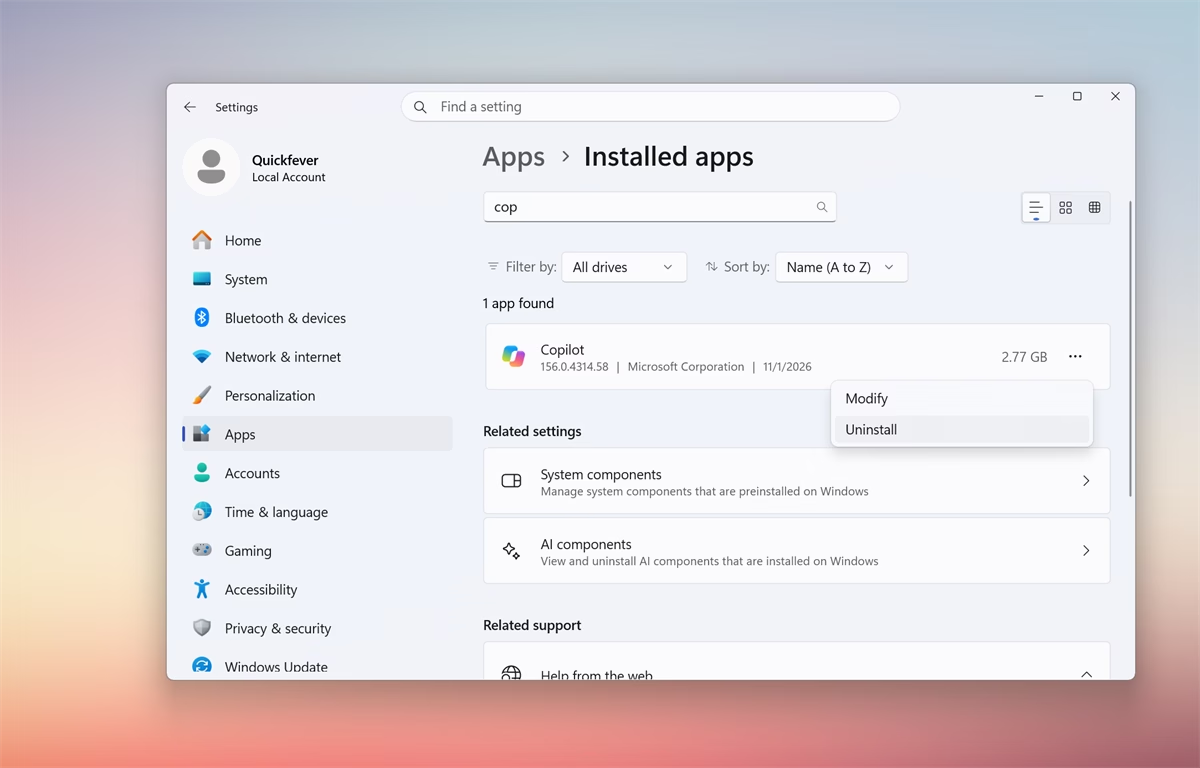
Prefer the other way? Navigate to Windows Settings > Apps > Installed Apps > Copilot > Uninstall.
If you want to reduce further operating system noise and prompts, you can also check our guide on how to disable Windows built-in advertisements and telemetry.
How to Uninstall the Deprecated Cortana App
Because Cortana is permanently retired, keeping its placeholder package on your system is unnecessary. You can remove it via normal settings or PowerShell:
- Open Settings > Apps > Installed apps (or Apps & features on Windows 10).
- Find Cortana in the application list, click the menu dots, and select Uninstall.
If the Uninstall button is grayed out on your build, launch PowerShell as Administrator and run this command to force remove it:
Get-AppxPackage -allusers *Microsoft.549981C3F5F10* | Remove-AppxPackage
Turn Off Cortana: Modifying Windows Registry (Legacy Windows 10)
Cortana was originally built right into Windows 10 as the core search companion. While newer builds decoupled it, older legacy versions of Windows 10 still bind Cortana to the taskbar search bar. If you run an older build, setting the AllowCortana value to 0 tells Windows not to trigger Cortana when clicking the search bar.
You can do it manually by opening the Registry Editor (press Win + R, type regedit) and navigating to this path:
HKEY_LOCAL_MACHINE\SOFTWARE\Policies\Microsoft\Windows\Windows Search
Inside, set AllowCortana to 0.
Modifying values in the Windows Registry can be tricky if you are not accustomed to it. That is why we built a simple Registry Tweak file that you run just once with Administrator privilege: Bye Cortana.zip.
The ZIP package includes two registry files. The second file, WelcomeBackCortana.reg, restores Cortana if you ever need to re-enable it.
Download | Good Bye Cortana Zip to disable Cortana in Windows 10
Inside the ZIP archive, there are two registry records: GoodByeCortana.reg and WelcomeBackCortana.reg.

Step 1. Run GoodByeCortana.reg
Double-click the GoodByeCortana.reg file. Windows will prompt you to confirm adding data to the registry. Click Yes to proceed. If User Account Control asks for permission, click Yes.

The Registry Editor will notify you once the key has been merged. Click OK.
Step 2. Reboot Windows
Restart your computer so Windows can read the updated registry entry. Once rebooted, Cortana will no longer load, and standard local search will take its place.
Revert the Action: Enable Cortana Again
If you ever need to restore Cortana on an older installation, run the WelcomeBackCortana.reg file included in the ZIP download, then reboot your PC.
Ending words: You can disable it, but you may miss the voice commands if you relied on them. Today, Microsoft has shifted focus entirely to Copilot, but whether you want to clean out deprecated Cortana remnants or turn off modern AI features, these registry and PowerShell methods keep your system lean and responsive.


I was looking for anything to help me even though my laptop is fast. From all blogs and posts I have seen yours is one of the best and not over done with too much info. I was looking for more in-depth personalization not beginners. I will recommend to beginners.