

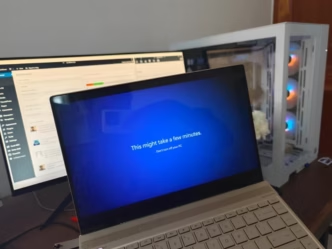

A bootable USB drive is actually not required to clean install Windows 11 if your computer can already boot into Windows. However, if your PC is experiencing severe boot loops, corrupted system files, or you are setting up a brand-new SSD, booting from an installation USB drive is the most reliable way to start fresh.
In this guide, we cover both methods step by step: how to perform a true clean install directly from an ISO file without a USB drive, and how to create a bootable USB using Rufus or Microsoft’s official Media Creation Tool for a complete fresh install of Windows 11 (version 26H2 and 24H2).
Check if your computer is compatible with Windows 11
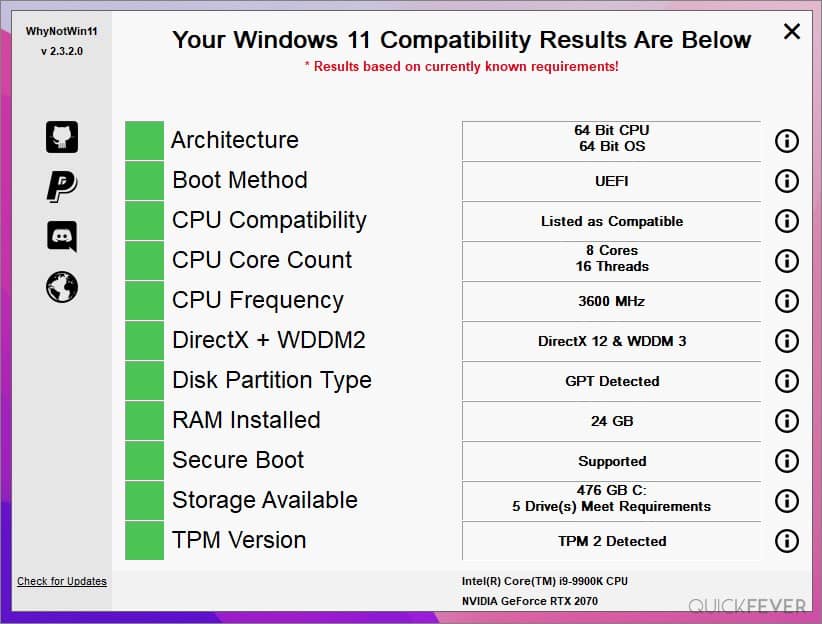
We have already published the Windows 11 Compatible Laptop and Processor List. For custom-built PCs, it can sometimes be tricky to verify whether TPM 2.0, Secure Boot, and UEFI are properly enabled in BIOS. An open-source tool named WhyNotWin11 on GitHub scans your hardware against all official Windows 11 requirements in seconds.
Important Pre-Installation Backup: A clean install formats your primary system partition and removes existing desktop programs. Always copy your critical personal files, documents, and game saves to an external hard drive, cloud storage, or a secondary drive before starting. Also keep a copy of your Wi-Fi or Ethernet driver handy just in case your network adapter is not recognized right away.
Method 1: Clean Install Windows 11 Without a USB Drive
If your PC currently boots into Windows, you can perform a true clean installation directly by mounting the official ISO file and choosing to keep nothing. This reinstalls Windows completely without needing a flash drive.
- Download the Windows 11 ISO: Grab an official copy from our Windows 11 ISO download guide or download the Windows 11 Insider Preview ISO.
- Mount the ISO Image: Right-click the downloaded ISO file and select Mount. Windows will open it as a virtual DVD drive.
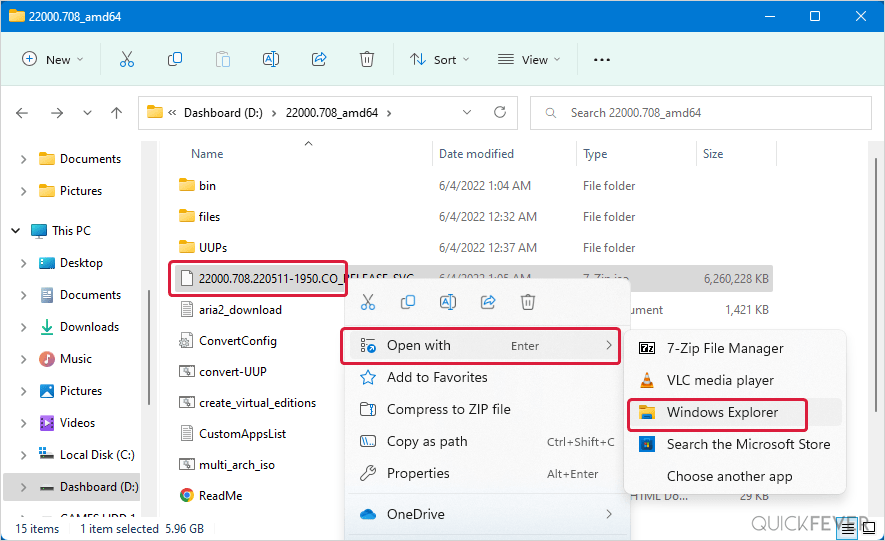
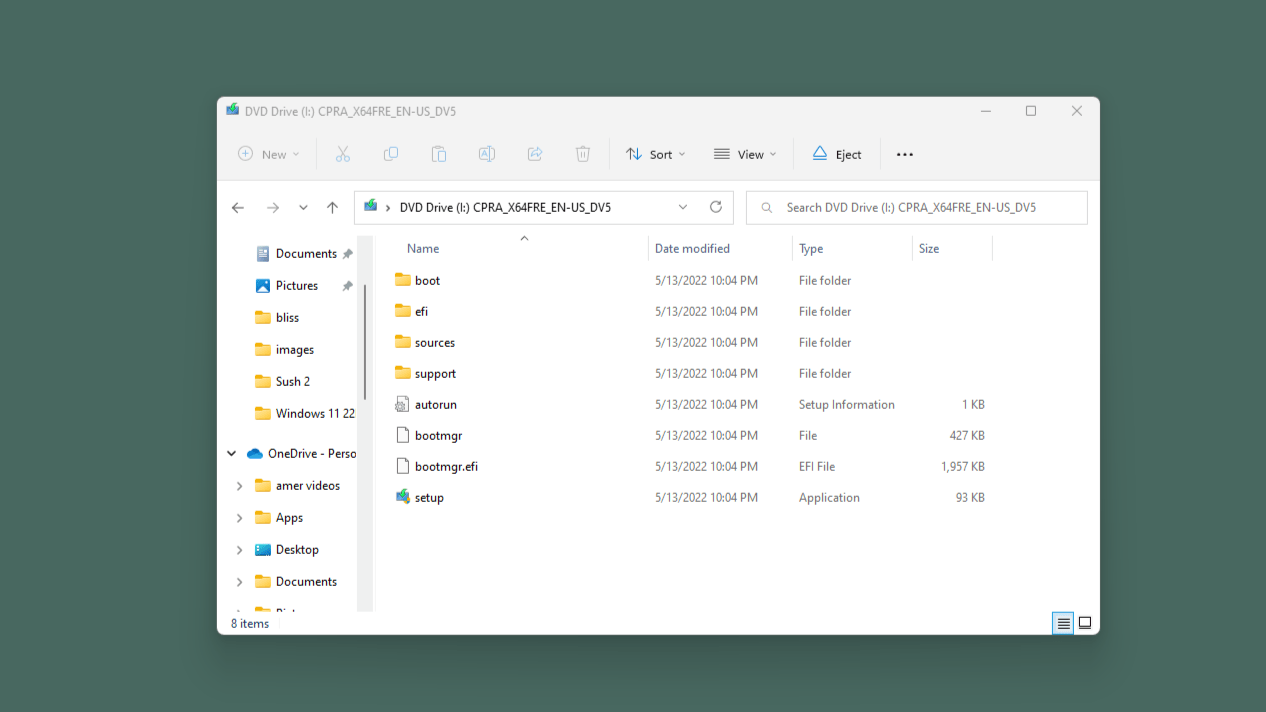
- Run Setup: Double-click the
setup.exefile inside the mounted drive to start the Windows 11 installation wizard.
- Choose What to Keep: When setup prepares the files, click “Change what to keep”. To perform a clean install, select Nothing. This ensures all apps and settings are wiped cleanly.
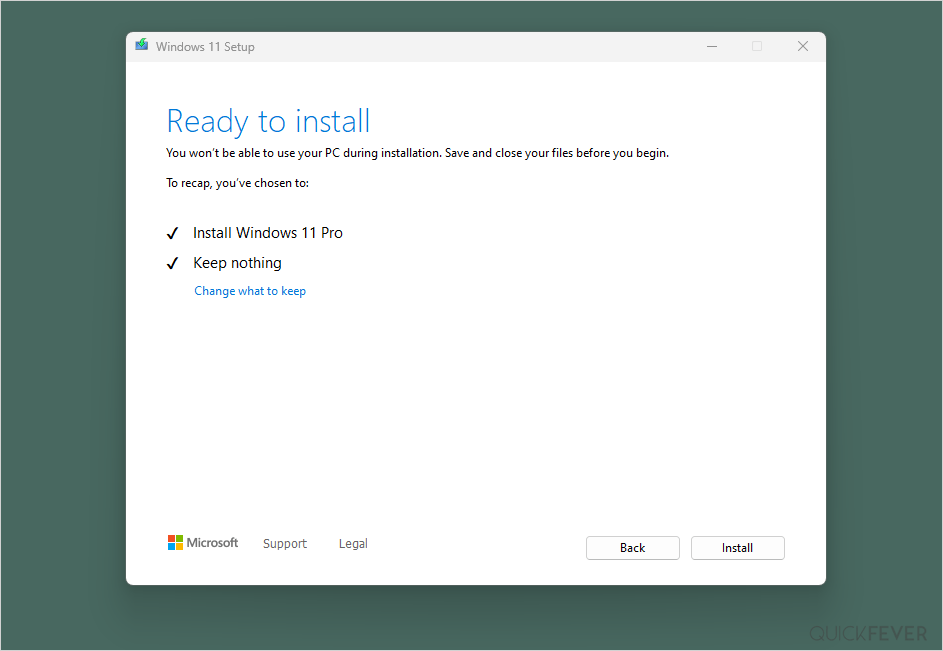
If the installer defaults to keeping personal files, make sure to manually toggle it to Nothing:
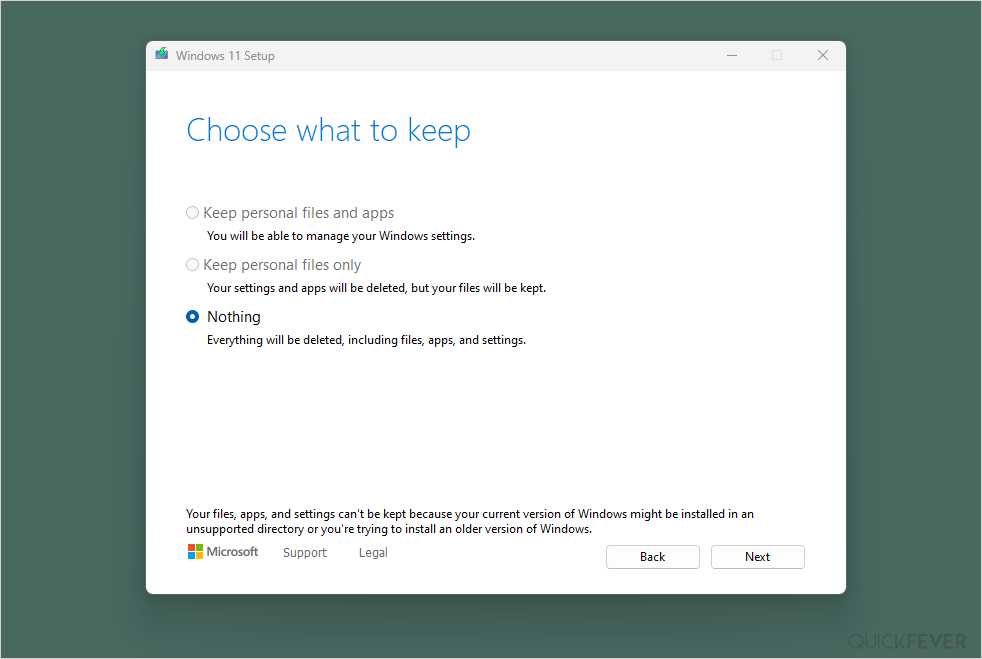
- Click Next. Setup will verify disk space and display the final ready-to-install confirmation screen.
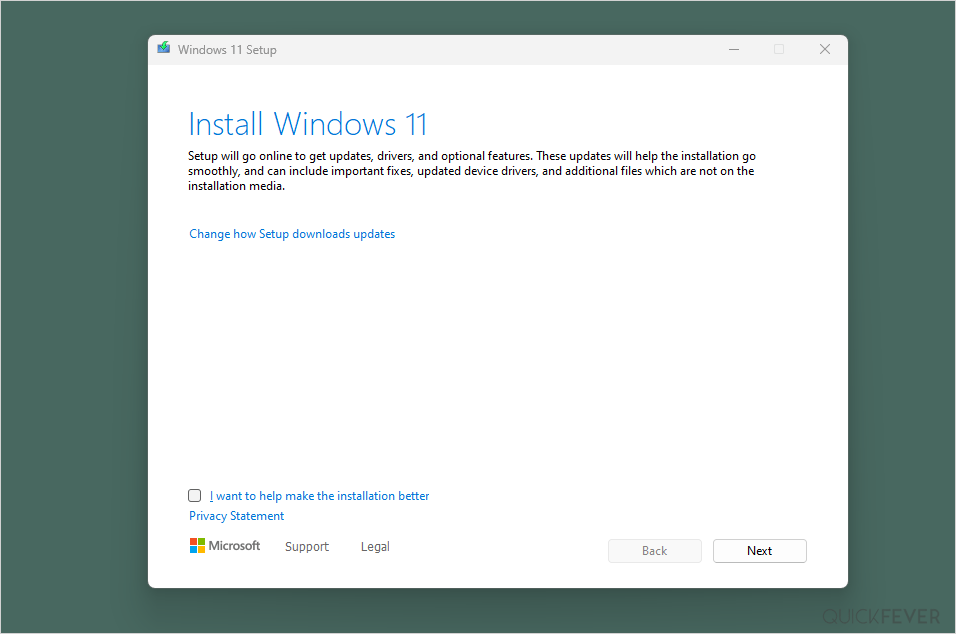
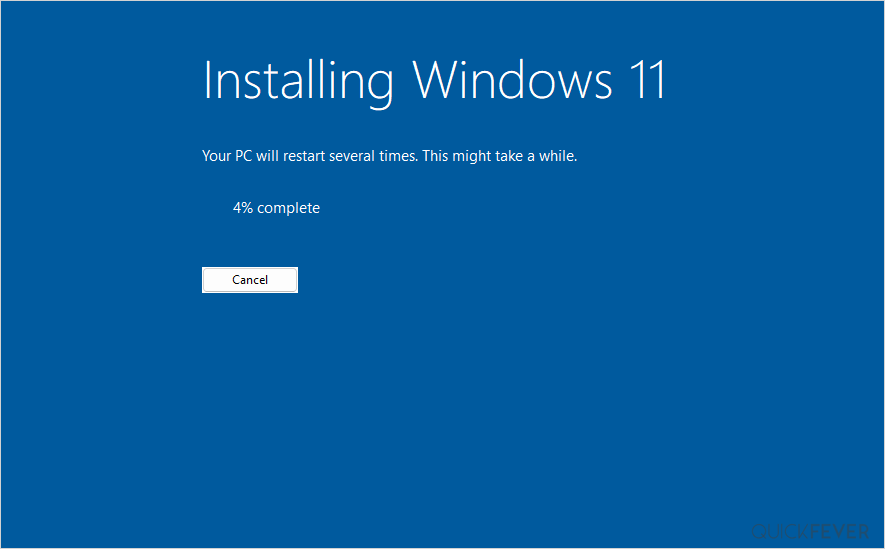
- Click Install. Your PC will restart into the blue installation progress screen. On an SSD, this process takes just 5 to 10 minutes.
Method 2: Clean Install Windows 11 (26H2) Using a Bootable USB
Using a bootable USB drive gives you full control over disk partitions and allows you to format unbootable drives, configure dual boots, or install on a brand-new computer.
Step 1: Create Your Windows 11 Installation USB
You can create a bootable USB drive using either of these two reliable tools:
- Using Rufus (Recommended): Follow our guide to create a bootable USB with Rufus. Rufus allows you to easily bypass the TPM 2.0, Secure Boot, and 4GB RAM checks, and even remove the mandatory Microsoft account requirement automatically!
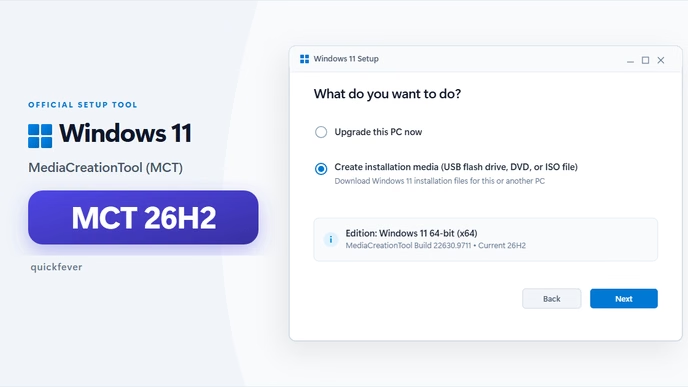
- Using Official Media Creation Tool: You can also use Microsoft’s official utility by following our Windows 11 Media Creation Tool guide.
Step 2: Boot from the USB Drive
Plug the USB drive into your PC and restart. When booting, immediately press your computer’s boot menu key:
| PC or Laptop Brand | Common Boot Menu Key |
|---|---|
| Dell, Alienware | F12 |
| HP, Omen, Pavilion | F9 or Esc |
| Lenovo, ThinkPad, Legion | F12 |
| Asus, ROG | F8 or Esc |
| MSI | F11 |
| Gigabyte, Aorus | F12 |
| Acer | F12 (enable in BIOS first) |
In the boot device list, select your USB flash drive with the UEFI prefix (for example, UEFI: SanDisk Ultra).
Step 3: Navigating the Windows 11 (26H2) Setup Wizard
Windows 11 26H2 features an updated installation interface. Follow these steps:
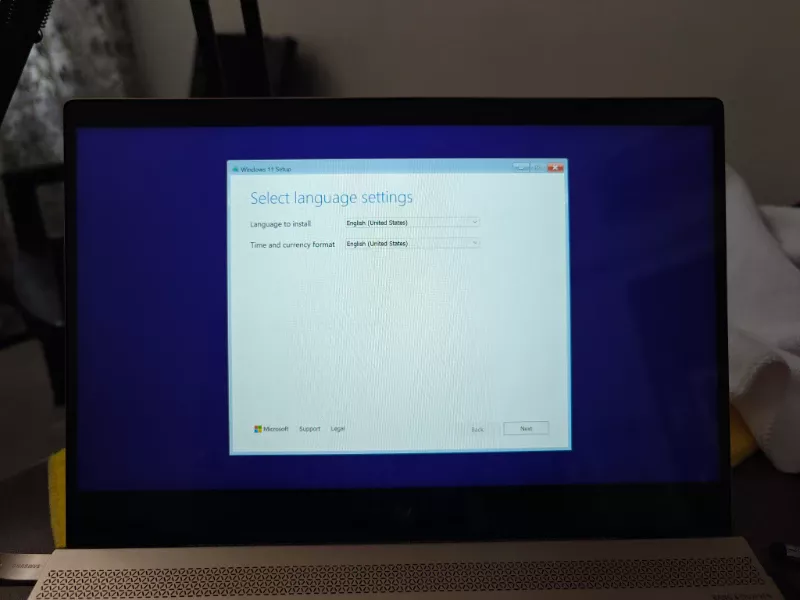
- Select Language and Keyboard: Choose your language, time and currency format, and keyboard input method, then click Next.
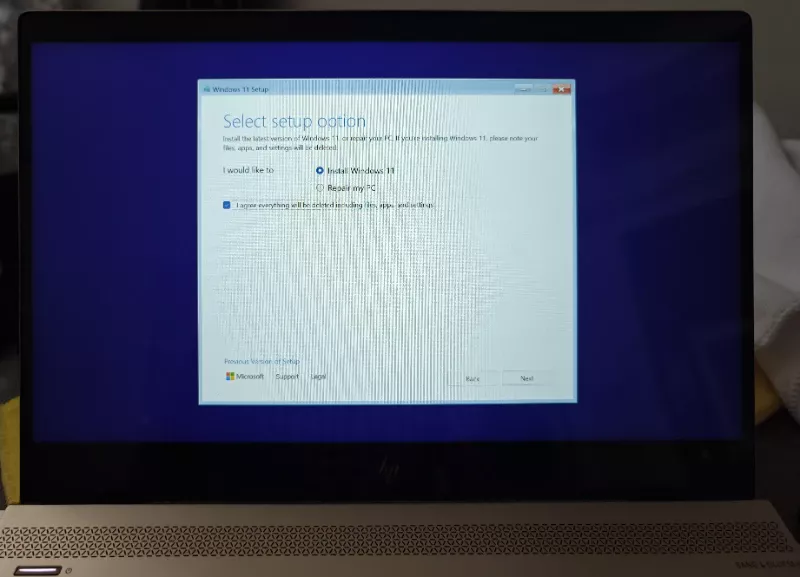
- Choose Setup Action: Select Install Windows 11 and check the box confirming you understand that setup will modify your disk, then click Next.
- Product Key: When prompted to activate, enter your 25-character product key, or click “I don’t have a product key”. Windows will automatically activate later via digital license once connected to the internet.
- Select Edition: Choose your licensed edition (typically Windows 11 Home or Windows 11 Pro) and accept the license terms.
- Partition Management (Clean Install): On the disk partition screen, select the existing system partitions on your primary drive (Drive 0) and click Delete until you have clean Unallocated Space. Select that Unallocated Space and click Next. Windows setup will automatically format and create the necessary EFI, MSR, and system partitions for you.
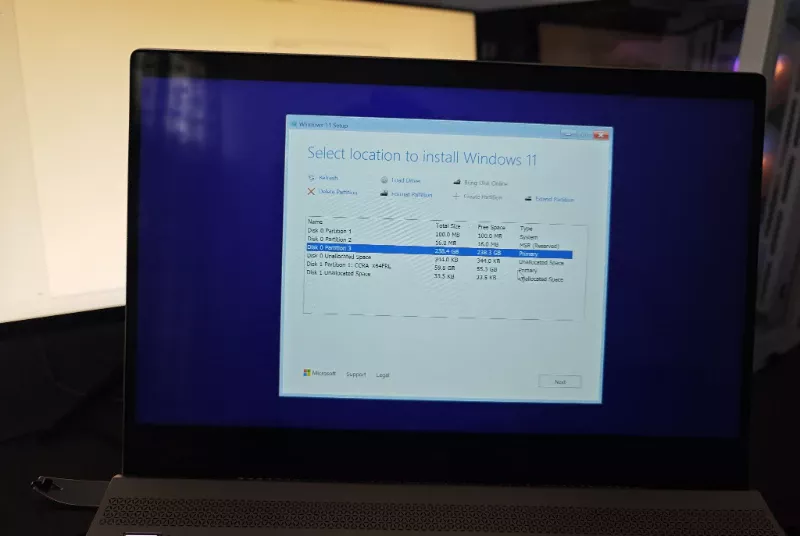
Troubleshooting: “We couldn’t find any drives”: On many 11th through 14th Gen Intel laptops, the partition list may show up completely empty. This happens when the installer lacks Intel Rapid Storage Technology (Intel VMD/RST) drivers. To resolve this, download the Intel RST driver package from your laptop manufacturer’s support site, extract the files onto your bootable USB, click Load Driver in setup, and select the extracted folder.
Setup will now copy installation files, unpack system components, and install updates. Once done, your computer will reboot automatically into the Out-of-Box Experience (OOBE).
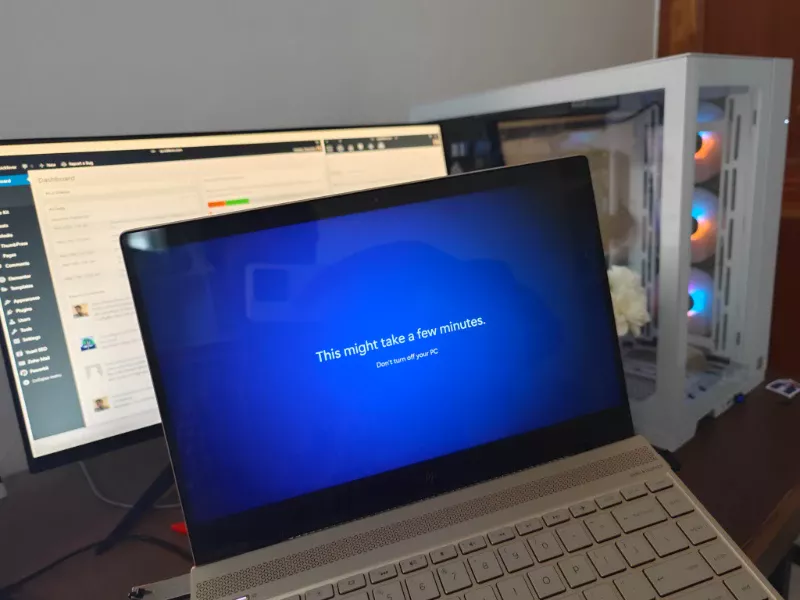
Step 4: Out-of-Box Experience (OOBE) and Local Account Setup
After the restart, you will arrive at the personalized setup screen where you choose your country, keyboard layout, and name your device.
Pro-Tip: Bypass Mandatory Microsoft Account in Windows 11:
By default, Windows 11 forces you to connect to the internet and sign in with a Microsoft account. If you prefer creating an offline local account:
1. On the “Let’s connect you to a network” screen, press Shift + F10 on your keyboard (or Shift + Fn + F10 on laptops).
2. In the Command Prompt window that opens, type start ms-cxh:localonly or oobe\bypassnro and press Enter.
3. Your PC will restart. Now, on the network screen, click “I don’t have internet” followed by “Continue with limited setup”.
4. You can now type a local username and password of your choice!
Notice on BitLocker in Windows 11 26H2: In version 26H2, Microsoft automatically enables BitLocker device encryption on clean installs if your hardware supports it. Once you reach the desktop, open Settings > Privacy & security > Device encryption to verify your status and back up your recovery key to a safe place.
Further things: Windows 11 Installation
Congratulations, your clean installation is complete! Here are the essential first steps to get your system tuned and running smoothly:
- Run Windows Update: Go to Settings > Windows Update and click Check for updates. This automatically downloads stable WHQL drivers for your Wi-Fi, Bluetooth, audio, and chipset.
- Install Dedicated Graphics Drivers: If your PC has an NVIDIA GeForce, AMD Radeon, or Intel Arc GPU, download the latest drivers directly from the manufacturer for optimal display and gaming performance.
- Install Essential Apps: Check our curated list of the best Windows 11 apps to grab your favorite browsers, media players, and productivity tools.
- Turn Off Built-In Advertising: Follow our guide to disable all Windows 11 built-in advertising to stop Microsoft from pushing recommended apps into your Start Menu and Lock Screen.
- Boost Performance: If you want your system to feel extra snappy, check out our guide on how to speed up Windows 11 performance.
Frequently Asked Questions
Does a clean install erase files on secondary hard drives?
No. A clean install only formats the partition or disk you select (typically Drive 0). Secondary internal hard drives, SSDs, or external storage drives remain untouched. If you want to be extra careful, you can disconnect secondary drives before starting setup.
Can I install Windows 11 26H2 on an unsupported PC?
Yes. Creating your installation media with Rufus lets you check the boxes to bypass TPM 2.0, Secure Boot, and minimum RAM checks. The operating system will install and run smoothly on supported 64-bit hardware.
Will my Windows 11 activate automatically after a fresh install?
Yes, provided you select the same edition (Home or Pro) that was previously licensed on that computer. Your digital license is tied to your motherboard hardware ID and Microsoft activation servers will validate it as soon as you connect online.
Did your clean install complete without any issues, or did you hit a snag with partitions or drivers? Let us know in the comments below!


I installed prime OS exactly by the same the process as it is shown in its official website . I was using windows and created a partition of 20 gb and then made a new volume and format it in ntfs format.Then i installed the prime os iso file from official website and then use a sandisk pendrive of 16 gb and then make it bootable using rufus and i selected the format option ntfs and then restarted my pc and go to the boot menu using f12 (my pc is dell vostro i3) and selected sandisk in uefi option and then a screen for partition. I selected the one which i created and then format it in ntfs format . I also installed grub menu and then it installed successfully.And i succesfully used it but then when i tried to boot into windows it didnt boot. Dell logo appears and the loading circle.I waited for an hour and it stuck at it.Then i tried to reinstall windows. So i downloaded the iso file of windows and make it bootable in a pendrive using rufus in ntfs format.Now when i selected my pendrive in the boot menu.First it shows some texts in a black screen.one of them was “An NTFS is already loaded”Then it shows a blackscren with some whitish blurry straight marks and then within the marks it shows the windows logo and load and when it load it only shows blue screen and nothing happens.My prime os is working fine but how can i boot windows. I am really in trouble plzz someone help.Any kind of help will be really appreciated.
Thanks