


Google Chrome is fast, we get that, but there are many Chromium-based browsers with more features and better privacy. We’ve reviewed and listed the best web browsers based on the Chromium Project, the same open-source codebase that powers Google Chrome and Microsoft Edge.
Chromium based browsers for Windows, Android
The Chromium project powers the world’s most widely used browser, Google Chrome. Chrome is built on top of Chromium, utilizing the Blink rendering engine. We’ve covered all the best web browsers for Windows, browsers for Mac, and our curated list of lightweight browser options. The Blink engine was originally a fork of WebKit (which itself originated from KHTML and KJS). Blink handles DOM rendering, CSS layouts, Web IDL bindings, Skia graphics rendering, and Google’s high-performance V8 JavaScript engine.
Quick note on Maxthon: Maxthon originally ran a dual-engine architecture (Trident and WebKit), but modern versions (Maxthon 6 and 7) have transitioned to the Chromium rendering core as well.
#1. Avast Secure Browser | Security | Built-in ad blocker
Known for its popular antivirus software, Avast released a Chromium-based browser called Avast Secure Browser. It is often bundled alongside the antivirus suite, but you are free to download and use it as a standalone browser. The company built it with security and privacy in mind. It is fully based on Chromium, allowing you to browse, shop, and bank safely with forced HTTPS encryption on supported websites.
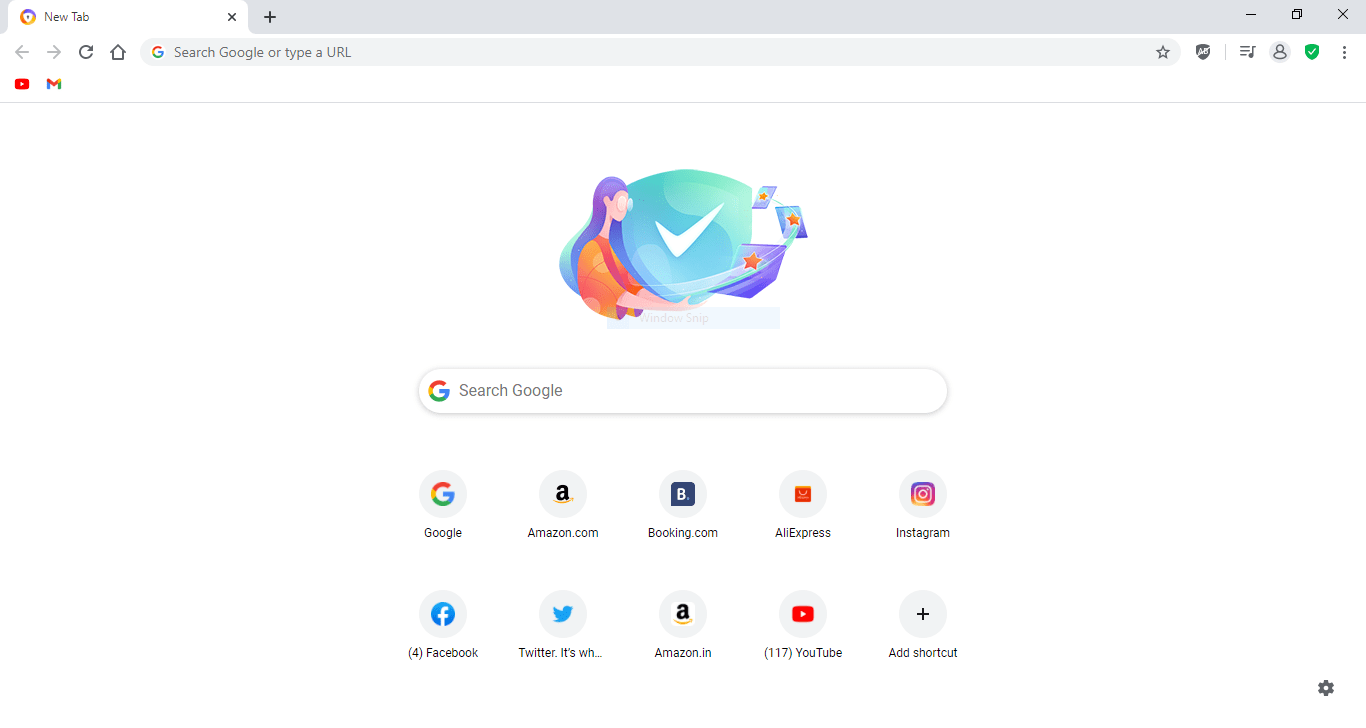
Key features:
- Built-in ad blocker to remove intrusive banners and video ads.
- Dedicated Bank Mode that isolates your browsing session to protect financial credentials from keyloggers.
- Built-in Video Downloader to save media and audio files directly from supported websites.
- Password Manager to securely store and autofill credentials across sessions.
- Anti-phishing security that quickly blocks malicious websites and suspicious file downloads.
#2. Brave | Native ad blocking | Built-in crypto tools
Brave launched its stable 1.0 release in late 2019, co-founded by Brendan Eich (creator of JavaScript and former CEO of Mozilla) and Brian Bondy. It is a Chromium-based web browser designed around aggressive out-of-the-box privacy. Other browsers feature a standard private mode that only hides browsing history on your local PC, but Brave includes a dedicated Tor window option that routes your connection through the Tor network for enhanced anonymity.
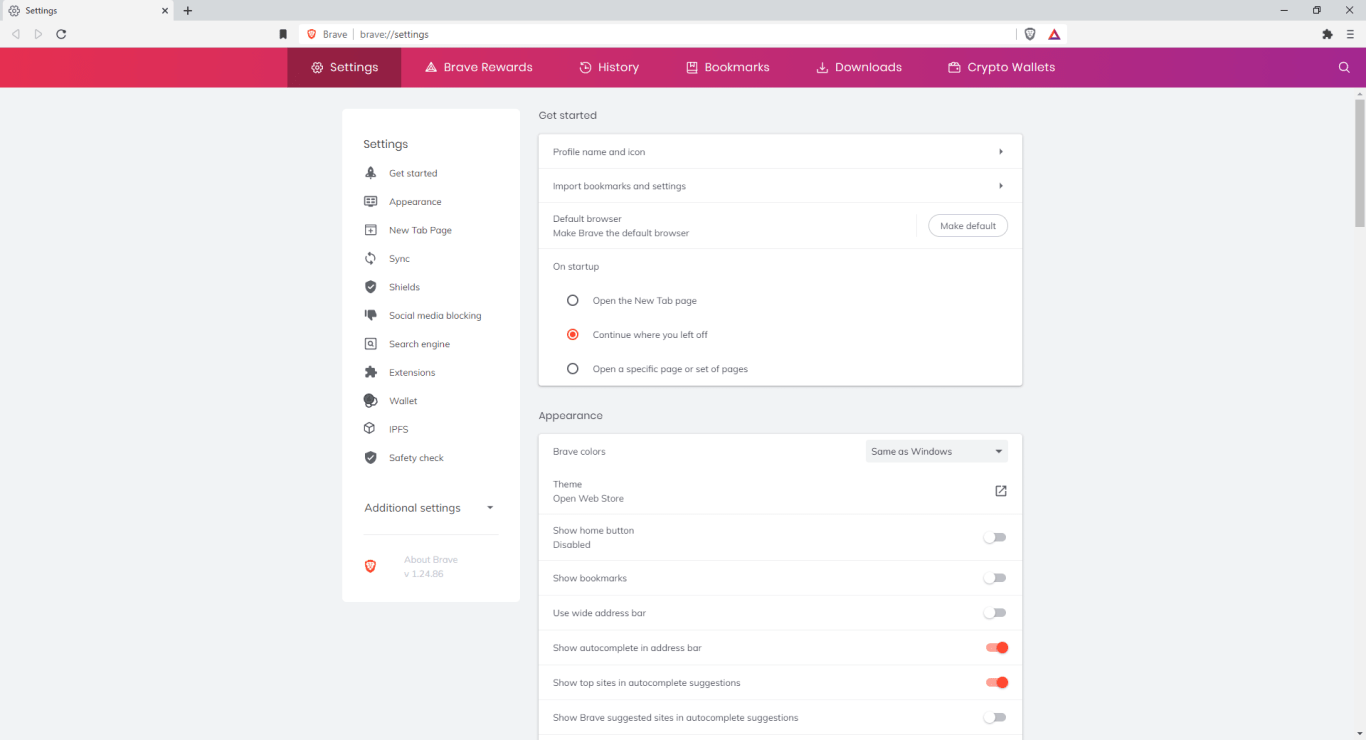
Key features:
- Built-in Tor windows for anonymous, onion-routed web browsing.
- Brave Shields blocks third-party ads, tracking scripts, and browser fingerprinting in native code without slowing down page rendering.
- Optional Basic Attention Token (BAT) system lets users earn rewards and tip content creators if enabled.
- Loads media-heavy pages substantially faster because tracking scripts and banners never download.
- Quickly imports bookmarks, extensions, and passwords from Google Chrome or Microsoft Edge during setup.
#3. Beaker Browser (Discontinued)
Fact check note: Beaker Browser was officially discontinued and its GitHub repository was archived in December 2022 after lead developer Paul Frazee transitioned to Bluesky. We have kept this entry for historical context regarding peer-to-peer web experiments.
Beaker was developed by Blue Link Labs as an experimental open-source browser for Linux, Windows, and macOS. While it supported traditional HTTP servers, Beaker stood out by integrating peer-to-peer Hypercore (Dat) protocol support, allowing users to host and publish websites directly from their local machine without configuring third-party hosting or touching command-line web servers.

Historical highlights:
- Allowed users to create and self-host a peer-to-peer Hyperdrive website in one click.
- Included an integrated live code editor to inspect, modify, and preview web pages side by side.
- Allowed other Beaker users to connect and read hosted web pages directly from peer nodes.
#4. Blisk | Developer-focused browser
Blisk is a specialized Chromium-based browser tailored specifically for web developers, designers, and QA testers. Available for Windows, macOS, and Linux, Blisk operates on a freemium model. It provides a limited daily free testing tier (typically 30 minutes daily) for inspecting mobile responsive layouts, with full unlimited access available via a paid subscription.

Key features:
- Side-by-side view displays desktop and mobile device viewports simultaneously with synchronized scrolling and clicks.
- Extensive library of pre-configured device emulations covering popular iPhones, iPads, and Android smartphones.
- Real-time JavaScript error monitoring that flags runtime issues directly on the active device screen.
- Auto-refresh function watches local source code files and reloads pages instantly upon saving.
#5. Epic Privacy Browser
Epic Privacy Browser was created by Hidden Reflex (a software company based in the US and India) with a strict privacy-first architecture. Epic strips all Google tracking code, usage metrics, and background update binaries directly from the Chromium source code. By default, Epic operates in permanent incognito mode, ensuring browsing history, cookies, and cache files are purged automatically whenever you close the window.

Key features:
- Comprehensive ad, tracker, and crypto-mining script blocking built into the core browser engine.
- Built-in encrypted proxy VPN service that routes browser traffic through secure geographic servers.
- Local address bar auto-complete resolves URLs through an offline database on your PC instead of querying remote search suggestions.
- Fingerprinting protection blocks tracking scripts from collecting hardware specs and font metrics.
#6. Microsoft Edge
Microsoft Edge is Microsoft’s flagship cross-platform web browser, available on Windows 10, Windows 11, macOS, Linux, Android, iOS, and Xbox consoles. While the original Edge launched in 2015 using the proprietary EdgeHTML engine, Microsoft rebuilt Edge entirely on the Chromium project in 2020. Edge is the default browser on modern Windows machines and offers outstanding battery efficiency, enterprise security, and full compatibility with Chrome Web Store extensions.

Key features:
- Full compatibility with both the Microsoft Edge Addons catalog and the Google Chrome Web Store.
- Built-in PDF reader powered by the Adobe Acrobat engine, allowing users to annotate, sign, and view documents.
- Microsoft Defender SmartScreen protects against phishing schemes, credential theft, and malicious downloads.
- Efficiency mode and sleeping tabs reduce memory and CPU overhead on laptops.
- Vertical tabs and Tab Groups make managing dozens of work projects clean and straightforward.
#7. Opera
Opera is one of the longest-running names in web browsing. Originally launched in 1995 as a commercial shareware browser powered by the Presto engine, Opera transitioned to full freeware in 2005 and adopted the Chromium engine in 2013. Today, Opera distinguishes itself through integrated social messaging sidebars, customized modular design (Opera One tab islands), and built-in proxy tools.

Key features:
- Integrated sidebar messenger supporting WhatsApp, Messenger, Instagram, and TikTok without switching tabs.
- Free built-in browser VPN proxy with unlimited data for basic privacy protection.
- Tab Islands feature organizes related browsing sessions into collapsible visual groups automatically.
- Built-in ad blocker and tracker blocker to speed up browsing on busy websites.
- Integrated snapshot utility with editing tools to crop, blur, and share screenshots quickly.
#8. Torch Browser (Discontinued)
Fact check note: Torch Browser was officially discontinued and shut down. Official download links were removed and updates ceased after 2020. Running older builds poses serious unpatched security vulnerabilities. We keep this profile strictly for archival reference.
Torch Browser was developed by Torch Media Inc. as a media-centric Chromium fork. It targeted users who frequently downloaded multimedia files, packaging an integrated BitTorrent client, audio grabber, and native media player directly into the browser window without requiring external standalone utilities.

Historical highlights:
- Integrated BitTorrent client allowed downloading torrent files directly from the browser window.
- Media Grabber button extracted audio and video streams from media pages in one click.
- Built-in Torch Player allowed playback of partially downloaded media files.
- Note: Past versions drew criticism from security researchers for bundling promotional search toolbars and potentially unwanted adware.
#9. Vivaldi
Vivaldi was founded by former Opera Software co-founder and CEO Jon von Tetzchner after Opera discontinued the Presto engine and closed the My Opera community site. Built for power users who want deep customizability, Vivaldi offers nearly endless UI configuration options across Windows, macOS, Linux, and Android.

Key features:
- Advanced two-level tab stacking and split-screen tab tiling to view multiple web pages side by side in a single window.
- Built-in privacy tools that block intrusive trackers and banner ads without third-party extensions.
- Full compatibility with Chrome Web Store extensions while disabling Google telemetry and ad-profiling APIs by default.
- Integrated productivity suite featuring an offline notes tool, customizable quick commands, and built-in mail and calendar clients.
#10. Yandex Browser
Yandex Browser is developed by Russian technology firm Yandex and is built on the Chromium engine. Available on Windows, macOS, Linux, Android, and iOS, the browser integrates deeply with Yandex’s search ecosystem. It features smart search capabilities, automated webpage and image translation, and a distinctive transparent interface.

Key features:
- Active security protection that checks file downloads against antivirus databases and warns against fraudulent sites.
- DNS spoofing protection and DNSCrypt encryption to protect queries on untrusted public Wi-Fi networks.
- Built-in real-time translation for international text and web images.
- Customizable background wallpapers and animated home screen themes.
#11. SRWare Iron
SRWare Iron is developed by German software company SRWare. Its central mission is to eliminate Google tracking and privacy-compromising telemetry from the Chromium browser code. SRWare provides users with a clean, lightweight alternative that mimics Google Chrome’s interface without transmitting client IDs, error reports, or search tracking back to Google.
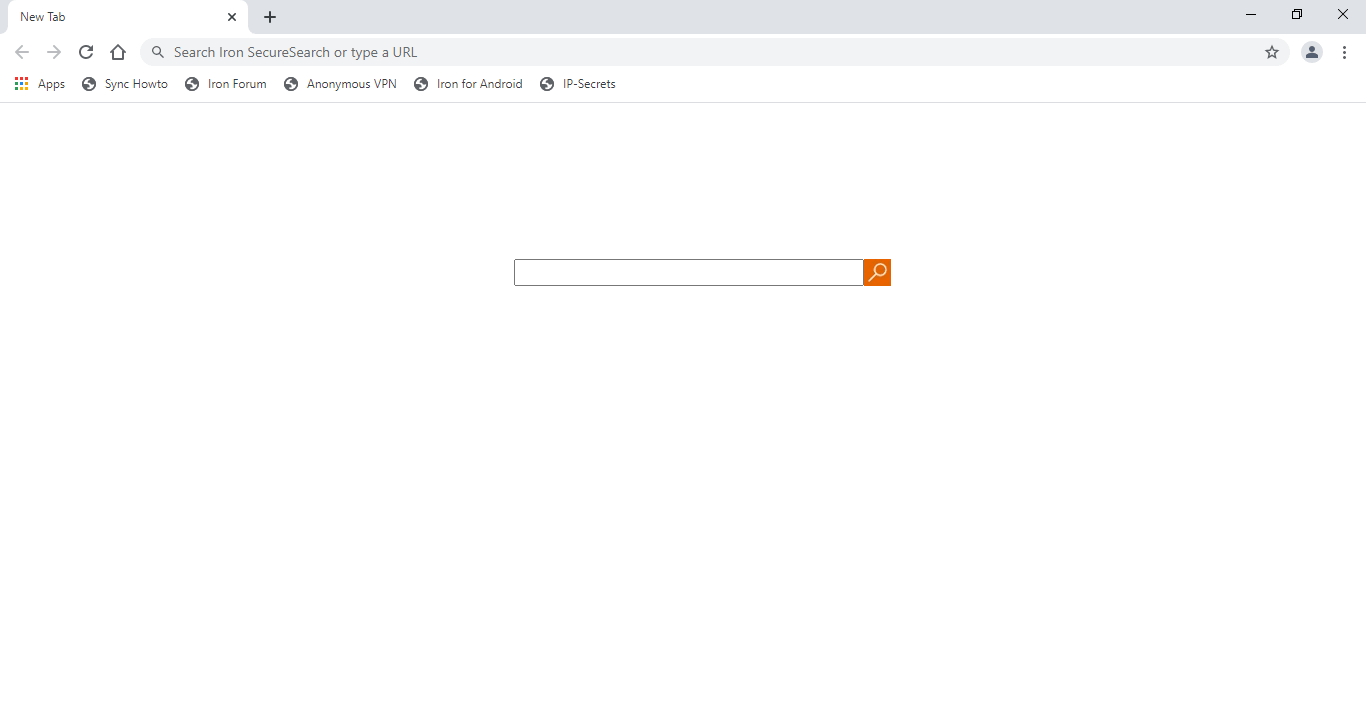
Key features:
- Stripped of Google tracking tokens, installation IDs, and background metrics reporting.
- Built-in ad blocker configuration to remove intrusive ads from your daily browsing.
- Full compatibility with Chrome Web Store extensions and themes.
- Cross-platform availability on Windows, macOS, Linux, and Android.
Browsers not based on Chromium
If your goal is to support web engine diversity and move away from the Chromium monoculture entirely, several excellent non-Chromium browsers exist:
| Browser | Rendering Engine | License / Price | Primary Strength |
|---|---|---|---|
| Mozilla Firefox | Gecko / SpiderMonkey | Free / Open Source | Independent flagship browser with multi-account containers |
| LibreWolf | Gecko | Free / Open Source | Privacy-hardened Firefox fork with built-in uBlock Origin |
| Pale Moon | Goanna | Free / Open Source | Classic customizable Firefox code fork with XUL extension support |
| GNU IceCat | Gecko | Free / Open Source | Entirely free software GNU project fork of Firefox |
| Apple Safari | WebKit | Free (macOS / iOS) | Default Apple ecosystem browser with outstanding power efficiency |
| Lynx | Text-based | Free / Open Source | Classic terminal-only text browser for low-resource environments |
Whether you choose a hardened privacy build like Brave, a power-user multi-tool like Vivaldi, or Microsoft Edge for productivity, Chromium provides a solid foundation with full web standards support. Which Chromium alternative are you currently running? Let us know in the comments below.



TOR in Brave Browser not working at all !