
Everyone needs a reliable web browser on Windows to get work done, stream videos, and browse daily. We tested the leading options on Windows 11 and Windows 10 to see how they handle memory usage, ad blocking, and tab management. Earlier, Internet Explorer came pre-installed on every PC. Now Microsoft Edge is the default, and while Edge is much faster than old Internet Explorer, there is no obligation to stick with Microsoft’s default choice.
If you are setting up a new computer, take a look at our guide on how to clean install Windows 11 or explore our list of lightweight browsers for Windows if your laptop has limited system memory.
The best web browsers for Windows
1. Google Chrome
Windows | macOS | Linux | Android | iOS | ~66% desktop market share – Get Google Chrome
Google Chrome holds roughly 66% of the global desktop market share for good reason. Chrome works with virtually every website on the internet, syncs your history and passwords across mobile devices, and receives rapid security patches every four weeks.
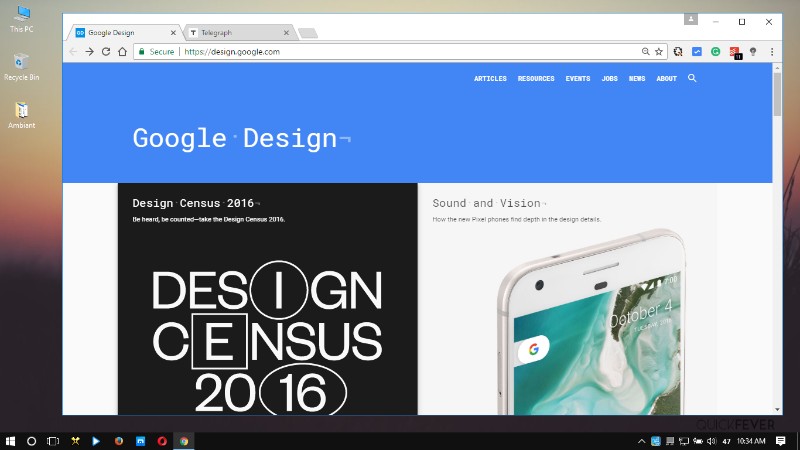
Chrome has an undeniable reputation as a RAM hog. If you keep thirty tabs open on an 8 GB laptop, you will feel the fan spin up. Google added built-in Memory Saver and Energy Saver toggles in performance settings, which put inactive tabs to sleep and free up physical RAM. Keep in mind that Chrome’s transition to Manifest V3 limits how traditional content-blocking extensions like uBlock Origin operate, directing users toward uBlock Origin Lite instead. If you want to get the most out of Google’s browser, check out our roundup of useful Google Chrome features.
2. Zen Browser
Windows | macOS | Linux | Gecko engine | Open source – Get Zen Browser
Zen Browser is an open-source project built on Firefox’s Gecko engine that brings modern vertical tabs and clean workspace organization to desktop browsing without the Chromium monoculture.

Instead of standard horizontal tabs cluttering the top bar, Zen arranges tabs in a collapsible left sidebar. You can divide projects into distinct Workspaces, split tabs side by side inside a single window, and toggle a minimal compact mode. Because Zen uses Gecko under the hood, you get full access to the Mozilla Add-ons repository, including unrestricted ad-blocking tools. You can grab the latest Windows build from Zen Browser official downloads.
3. Brave Browser
Windows | macOS | Linux | Android | iOS | Native ad blocking – Get Brave Browser
Brave is the best choice if you want fast, private browsing without installing external extensions. Built on Chromium, Brave gives you complete compatibility with Chrome Web Store add-ons while stripping out Google telemetry.
- Brave Shields blocks ads, trackers, cookie consent popups, and browser fingerprinting at the network layer in native code, completely avoiding Manifest V3 extension restrictions.
- Pages load noticeably faster on mobile hotspots and slow connections because third-party tracking scripts never get downloaded in the first place.
- Includes built-in Tor browsing windows for temporary anonymous sessions and an independent search engine via Brave Search.
Brave offers optional Basic Attention Token (BAT) rewards for users who choose to view non-intrusive notifications, but you can turn off the crypto features entirely during setup and use it as a lean, ad-free browser.
4. Mozilla Firefox
Windows | macOS | Linux | Android | iOS | ~6% market share – Get Firefox
Mozilla Firefox remains the primary independent open-source browser holding the line against Chromium dominance. Powered by the Gecko rendering engine, Firefox operates outside Google’s web platform decisions and protects user privacy by default.

Firefox includes Enhanced Tracking Protection to block cross-site cookies, fingerprinters, and cryptominers. Its Multi-Account Containers add-on lets you isolate work, personal, and banking sessions within separate tab colors so trackers cannot follow you across domains. Firefox also commits to supporting Manifest V2 extensions alongside V3, meaning traditional ad blockers continue to run with full rule sets. For offline installers, check our Firefox update tracker and download links.
5. LibreWolf
Windows | macOS | Linux | Hardened privacy | Zero telemetry – Get LibreWolf
LibreWolf is a hardened, community-maintained fork of Firefox designed specifically for users who want zero telemetry and strict privacy right out of the box. You do not need to spend an hour tweaking advanced about:config settings to secure your browser.
- Comes pre-installed with uBlock Origin and enables Enhanced Tracking Protection in Strict mode by default.
- Completely strips out Mozilla telemetry, sponsored shortcuts, Pocket recommendations, and Google Safe Browsing phoning-home requests.
- Enables Resist Fingerprinting (RFP) protections to prevent advertising networks from identifying your unique hardware and display profile.
Because LibreWolf deletes cookies and browsing cache automatically when closed, you can add exceptions for sites where you prefer to stay logged in. You can download the latest Windows installer or portable build from LibreWolf official website.
6. Vivaldi
Windows | macOS | Linux | Android | iOS | Deep customization – Get Vivaldi
Created by the former CEO of Opera, Vivaldi is designed for tinkerers who want absolute control over their workspace. Every menu, toolbar, keyboard shortcut, and mouse gesture can be customized or moved anywhere on your screen.

Two-level tab stacking lets you organize dozens of open tabs into tidy groups, while tab tiling allows you to view multiple active web pages simultaneously inside one window. The sidebar packs a built-in notepad, calendar, mail client, and quick web panels for messenger apps. Vivaldi is based on Chromium, supports Chrome extensions, and includes its own native ad and tracker blocker.
7. Microsoft Edge
Windows | macOS | Linux | Android | iOS | ~14% desktop market share – Get Microsoft Edge
Microsoft Edge comes pre-installed on Windows 11 and Windows 10. When Microsoft dropped the legacy EdgeHTML engine and rebuilt Edge on Chromium, it became one of the fastest and most memory-efficient browsers on the platform.

Edge includes excellent built-in features like vertical tabs, sleeping tabs, Split Screen, and one of the best PDF readers on Windows with inking support. The downside is Microsoft’s persistent nagging. Windows pushes Edge heavily through search flyouts and system prompts, and the browser itself comes cluttered with shopping widgets, news feeds, and sidebar promotions that require manual cleanup in settings.
If you prefer another browser after a fresh Windows install, right-click Edge on the taskbar, open an InPrivate window, download your favorite browser, and switch your default browser in Windows settings.
8. Dia Browser and Arc
Windows | macOS | iOS | AI-native browser & Spaces – Get Arc
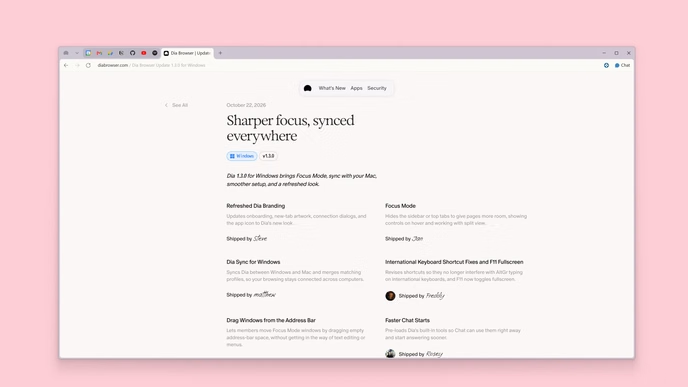
The Browser Company challenged standard browser design with Arc, introducing vertical Spaces, pinned tabs, and split-screen workflows. Now, their team has shifted development focus toward Dia Browser, an AI-native browser built to handle web tasks proactively.
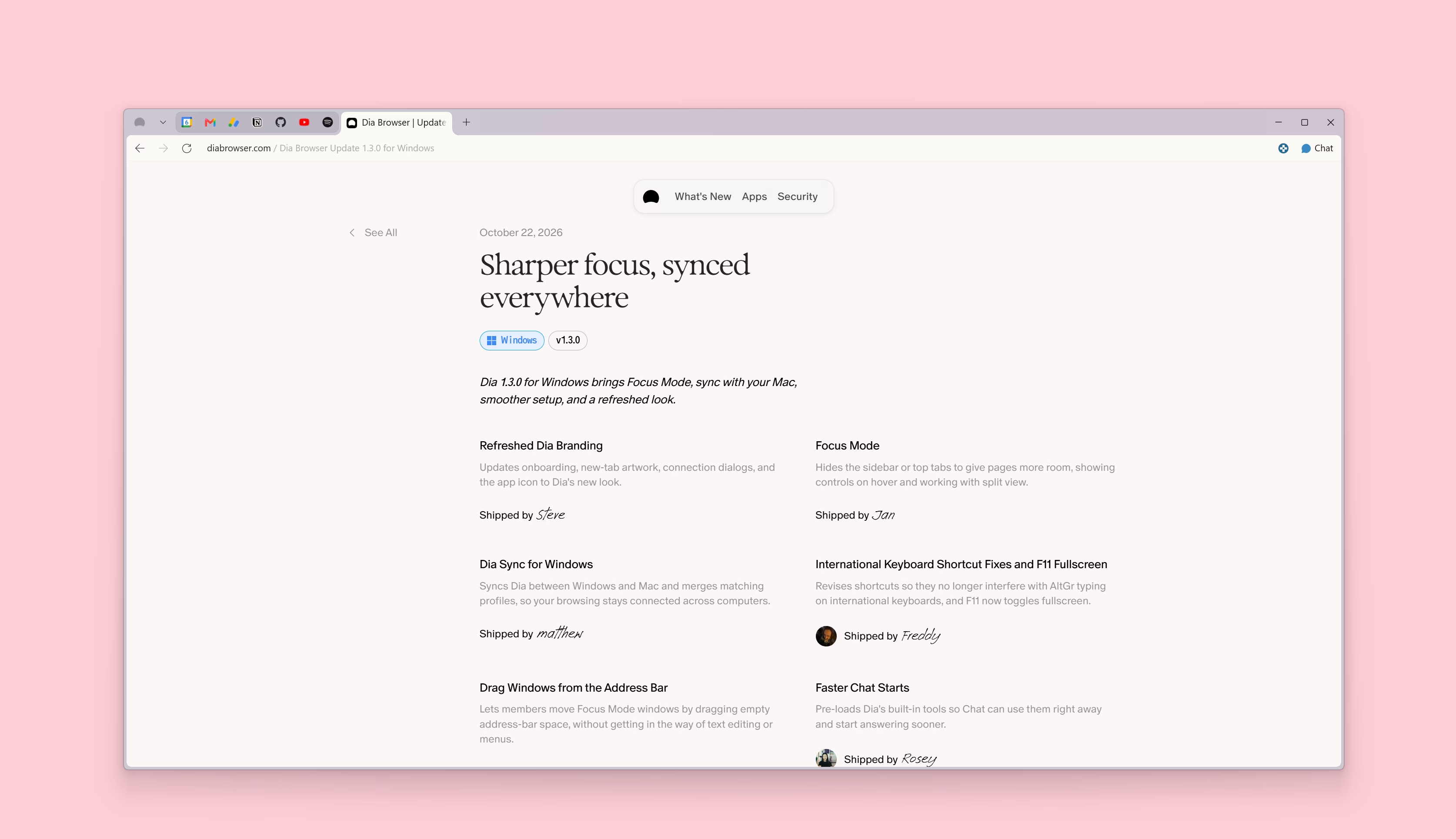
While Arc reimagined window layouts, Dia integrates intelligence directly into your daily browsing. Instead of jumping between tabs to copy and compare information, Dia can synthesize notes across open pages, draft replies from context, and automate repetitive actions. You can read our detailed breakdown in our Dia Browser guide. If you still use Arc on Windows, check our guides on how to set Arc as default in Windows 11 and managing Arc tab history.
9. Thorium Browser
Windows | Linux | macOS | AVX2 optimized | High performance – Get Thorium
Thorium is a specialized, open-source Chromium fork built for maximum speed. Unlike standard Chrome builds that compile with conservative processor baselines to maintain compatibility with older systems, Thorium compiles with optimizations like AVX2, SSE4.2, and compiler flags tuned for modern x86-64 hardware.
- Consistently delivers higher Speedometer and web rendering benchmark scores compared to stock Chrome or Edge.
- Reduces tab-switching latency and input delay on high-refresh-rate displays.
- Retains full Chrome Web Store extension support, Widevine DRM playback for streaming services, and optional Google sync.
If you have an 8th-generation Intel Core, AMD Ryzen, or newer processor, Thorium squeezes peak performance out of your CPU. You can check releases on Thorium official site.
10. Mullvad Browser
Windows | macOS | Linux | Anti-fingerprinting | Clearnet privacy – Get Mullvad Browser
Developed in direct collaboration between Mullvad VPN and the Tor Project team, Mullvad Browser brings Tor’s anti-fingerprinting technology to normal web browsing without routing traffic through the slower onion network.
- Applies the Tor Project’s fingerprint masking, ensuring that your screen size, font list, and system specs appear identical to thousands of other users.
- Comes with uBlock Origin pre-configured and blocks third-party trackers, WebRTC leaks, and cross-site cookies.
- Completely free and open-source software that does not require a Mullvad VPN account or any paid subscription to use.
When you close the browser, your session data is automatically wiped clean. You can download it directly from Mullvad Browser official download.
11. Opera and Opera GX
Windows | macOS | Linux | Android | iOS | Free proxy & gaming limiters – Get Opera
Opera runs on Chromium and bundles several convenience tools directly into the application so you do not need third-party add-ons.

The standard Opera One release organizes tabs into smart Tab Islands and includes a free browser proxy, built-in ad blocker, and quick-access sidebars for WhatsApp and Telegram. For gaming PCs, Opera GX offers adjustable hardware limiters that cap how much CPU, RAM, and network bandwidth the browser can consume while you run games in the background.
12. Chromium and Ungoogled Chromium
Windows | macOS | Linux | Pure open source | Zero telemetry – Get Chromium
Chromium is the open-source foundation behind Google Chrome, Microsoft Edge, Brave, Opera, and Vivaldi. It provides raw web rendering speed without Google’s proprietary branding or codecs.
For privacy purists, the community-driven Ungoogled Chromium project takes this a step further by stripping out background Google requests, disabling internal WebRTC IP leaks, and removing pre-configured search telemetry. You can learn more about these builds in our guide to top Chromium based browsers.
Web browser comparison matrix
| Browser | Rendering Engine | Native Ad Blocker | Memory Efficiency | Best For |
|---|---|---|---|---|
| Google Chrome | Blink (Chromium) | Limited | Moderate (Memory Saver) | Google ecosystem sync and web compatibility |
| Zen Browser | Gecko (Firefox) | Full add-ons | High | Vertical tabs and open-source customization |
| Brave Browser | Blink (Chromium) | Built-in (Shields) | High | Out-of-the-box ad blocking and fast loading |
| Mozilla Firefox | Gecko | Full add-ons | High | Privacy containers and Manifest V2 extensions |
| LibreWolf | Gecko | Pre-installed (uBlock) | High | Hardened privacy and zero telemetry |
| Vivaldi | Blink (Chromium) | Built-in | Moderate | Power users wanting tab stacking and deep customization |
| Microsoft Edge | Blink (Chromium) | Limited | High (Sleeping Tabs) | Windows 11 integration, vertical tabs, and PDF markup |
| Dia Browser | Chromium | Add-on based | Moderate | AI-assisted tab workflows and research synthesis |
| Thorium Browser | Blink (Chromium) | Add-on based | High | Maximum benchmark speed and modern CPU performance |
| Mullvad Browser | Gecko | Pre-installed (uBlock) | High | Anti-fingerprinting and clearnet privacy |
| Opera GX | Blink (Chromium) | Built-in | High (RAM/CPU Limiters) | Gaming PCs needing resource caps |
Which web browser should you choose?
Your ideal browser depends on your daily workflow and hardware:
- If you want zero setup and instant ad-free browsing across YouTube and news websites, choose Brave. Its native shields block junk before pages render.
- If you want hardened privacy without Google or Mozilla telemetry, install LibreWolf or Mullvad Browser.
- If you want modern vertical tabs and workspaces on an independent engine, pick Zen Browser.
- If you want maximum speed on modern 64-bit hardware, give Thorium a test run.
- If you work with fifty tabs open at once and need side-by-side page tiling, notes, and custom shortcuts, pick Vivaldi.
- If you want intelligent tab assistance and contextual research tools, keep an eye on Dia Browser.
To speed up page lookups across any browser you pick, consider setting up a fast encrypted DNS provider using our tutorial on how to change DNS servers on Windows 11.
Retired and legacy web browsers
Over the years, several experimental and niche browsers gained attention before being retired or superseded by modern projects. We preserve them here for historical reference:
Maxthon
Windows | macOS | Android | iOS | Legacy cloud browser – Visit Maxthon

Maxthon was one of the early pioneers of tabbed browsing and cloud syncing across platforms. While modern versions run on Chromium with tools like Passkeeper and a media resource grabber, its community presence has diminished compared to mainstream alternatives.
Ghostery Dawn
Windows | macOS | Linux | Discontinued Firefox fork – Visit Ghostery

Ghostery Dawn was a Firefox spin-off packaged with Ghostery tracker telemetry out of the box. Today, most users achieve identical results by simply installing the Ghostery extension directly on Firefox, Zen, or LibreWolf.
Opera Neon and Colibri
Windows | macOS | Retired concept browsers – Visit Opera Neon

Opera Neon was released in 2017 as an experimental concept featuring floating visual bubble tabs and physics-based animations. While no longer maintained, its interface experiments helped inspire modern concepts like Opera One and Arc. Similarly, Colibri explored a single-tab interface for distraction-free reading.